The erosion of petrogenic (fossil) organic carbon from exposed rocks links lithology, climate, and the evolution of atmospheric CO2 over geologic timescales. When liberated, some fractions of petrogenic organic carbon are rapidly oxidized to CO2 and others are passively translocated from land to sea via rivers. Black carbon is one of these passive fractions of organic carbon and comes in a variety of forms like charcoal, soot, petroleum, and graphite-like materials that are relatively unreactive, stable on short and long timescales, and is environmentally long-lived.
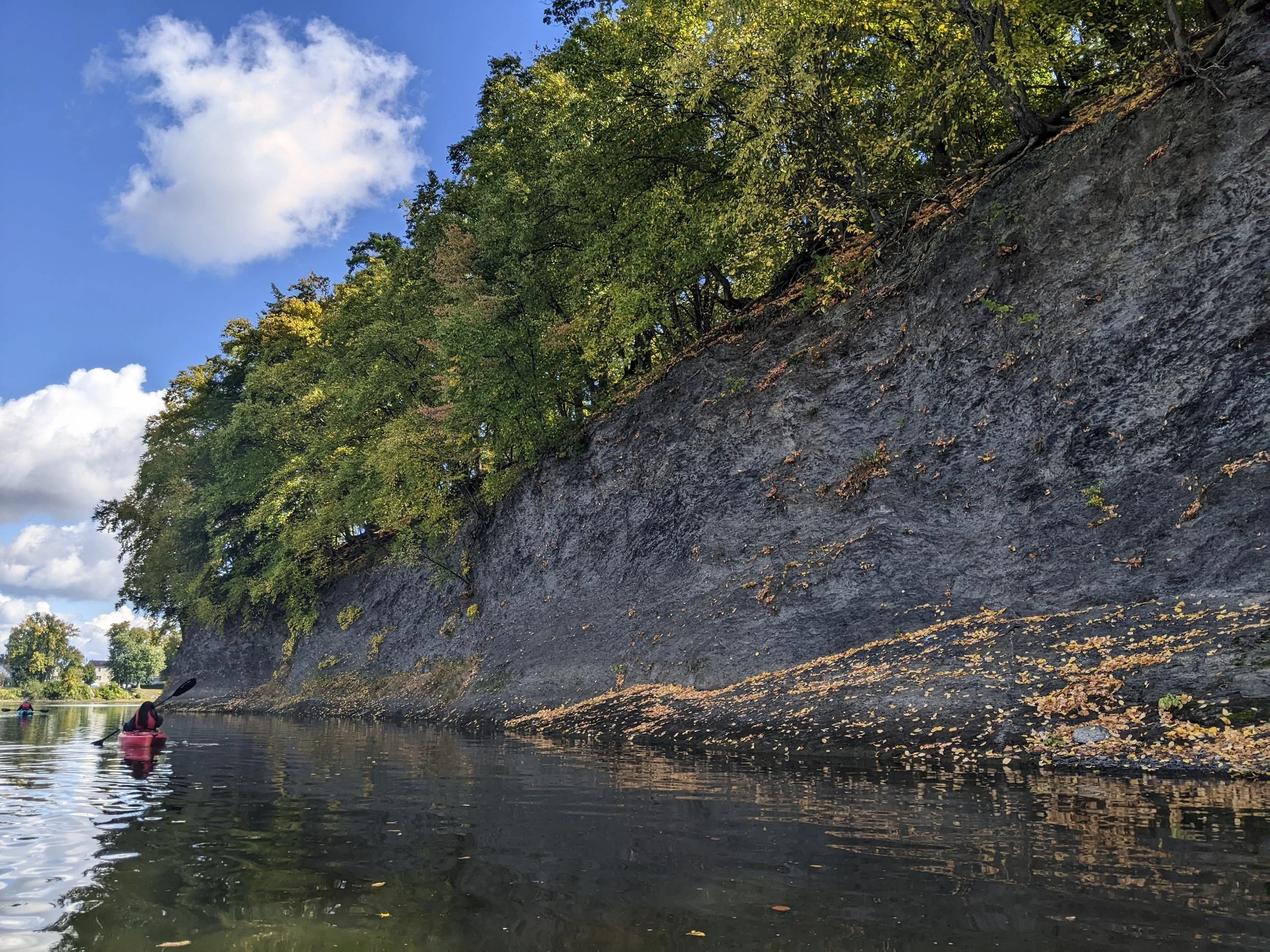
Shale outcrop near the confluence of the upper Hudson and Mohawk Rivers at Peebles Island.
For the first time, we show particulate black carbon to be derived from the weathering and erosion of shales within the Hudson River basin. The amount and proportion of black carbon from shales increases with river flow. During peak flows, the composition of particulate black carbon is similar to that of shale rocks collected from within the upper Hudson and Mohawk subcatchments.
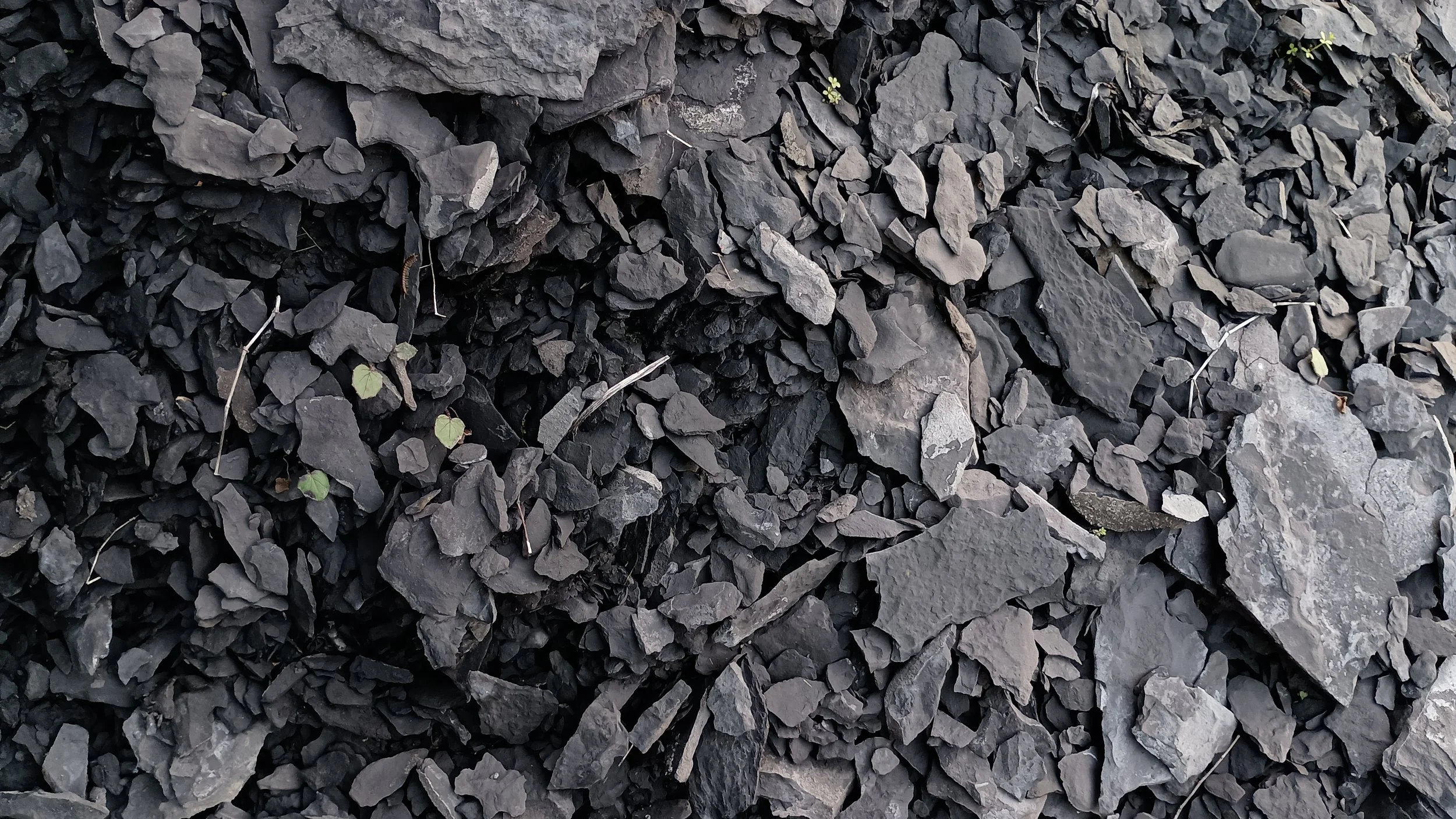
Crumbling shale at an outcrop near Amsterdam, NY.
This study was led by Alex Collins and was a collaborative effort of an all-RPI team of researchers! Together, our data show that underlying lithology has a first order control on particulate black carbon in river systems, and may be more important than historic wildfire activity in catchments underlain by organic-rich shales. We also suggest that particulate black carbon as a conservative tracer for petrogenic organic carbon, which is preferentially mobilized under moderate-to-high flow conditions, solidifying a link between short- and long-term carbon cycles.
This work is entitled “Substantial export of shale-derived particulate black carbon in the Hudson River indicated by compound-specific stable carbon isotopes (New York, United States)“ and was published in the journal Earth Surface Processes and Landforms.
